You can create adorable Pokemon amigurumi without spending a cent on patterns. We’ve curated 15 free crochet patterns that range from beginner-friendly spherical Pokemon like Jigglypuff to more complex designs like articulated Charizard, complete with guidance on choosing the right project for your skill level.
Free Pokemon patterns have exploded in variety throughout 2026, with designers releasing everything from classic starters to trending characters like the viral Pikachu ketchup-bottle holder and wishmaker Jirachi. The challenge isn’t finding free patterns anymore. It’s sorting through hundreds of options to find quality designs with clear instructions, accurate stitch counts, and realistic yarn requirements.
This collection solves that problem. Each pattern has been selected for clarity, completeness, and creator reliability. You’ll find options for every skill level, from your first amigurumi attempt to showpiece projects that’ll make fellow fans ask where you bought them. We’ll also share what separates a great free pattern from a frustrating one, plus expert tips on yarn substitutions and assembly techniques that’ll help your Pokemon actually look like the characters you love.
Whether you’re crocheting for yourself, making gifts for Pokemon fans, or building an entire Pokedex one skein at a time, these patterns give you a solid starting point without the paywall.
Why Pokemon Crochet Patterns Are Perfect for Every Skill Level
Pokemon crochet patterns strike a sweet spot that few crafts can match. Everyone recognizes these characters, which means you’re creating something instantly identifiable rather than explaining “it’s supposed to be a creature from my imagination.” That built-in recognition makes your finished work feel polished and impressive, even if it’s your first amigurumi project.
The beauty of Pokemon patterns lies in their natural range of complexity. A round, simple Jigglypuff teaches beginners the basics of working in continuous rounds and stuffing techniques. Meanwhile, a character like Jirachi, with its 5.5-inch frame featuring a headdress with multiple points, color changes between white and yellow jumbo yarn, and felt details in five different colors, challenges experienced crocheters to master shaping and assembly. You’re not stuck picking between “too easy” or “impossibly hard.” The 1,000-plus Pokemon species give you options at every skill level.
Free patterns democratize the hobby in ways paid patterns can’t. You can test a new technique on a Pikachu pattern without spending money, abandon a project that’s not clicking, or make an entire collection of starters without budget guilt. This accessibility encourages experimentation, try that half double crochet stitch on Squirtle’s shell, practice color changes on Meowth’s coin, or tackle your first magic ring on Ditto.
The collectible aspect adds another layer of satisfaction. Each finished Pokemon becomes a desk companion, a child’s toy, or a thoughtful handmade gift that people actually want. You’re building a tangible collection of your growing skills, one character at a time.
What to Look for in Quality Free Pokemon Patterns
Not all free Pokemon patterns are created equal. Before you invest hours crocheting, check for these hallmarks of a well-written pattern that’ll actually guide you to a finished character you’re proud of.
A quality pattern should include these essential elements:
- Complete abbreviation key explaining each stitch term (MR for magic ring, Sc for single crochet, Inc for increase, Dec for decrease)
- Row-by-row or round-by-round instructions with clear labeling like R(1), R(2) to help you track your progress
- Detailed materials list specifying yarn weight (jumbo acrylic, worsted weight), exact hook size (4.5mm is common), and any additional supplies like felt pieces or stuffing
- Finished dimensions so you know if you’re making a 3-inch keychain charm or a 5.5-inch display piece
- Assembly instructions for attaching parts like ears, tails, or headdress points
- Photos of the completed project from multiple angles showing color placement and proportions
Look for patterns that specify whether you’ll work in continuous rounds (spiraling without joining) or joined rounds with slip stitches and turning chains. The Jirachi pattern from 1upcrochet demonstrates solid structure by labeling rounds as R(#) and working the body and head continuously from the bottom up, which creates smooth shaping without visible seams.
Beginners should expect to encounter standard amigurumi stitches: single crochet forms the tight fabric, increases and decreases shape the curves, and occasional half double or double crochet stitches add texture. Patterns using techniques like magic rings, slip stitches, and turn chains aren’t advanced moves, they’re foundational skills you’ll use in nearly every Pokemon you make. A good pattern explains when and why each technique matters, not just where to place it.
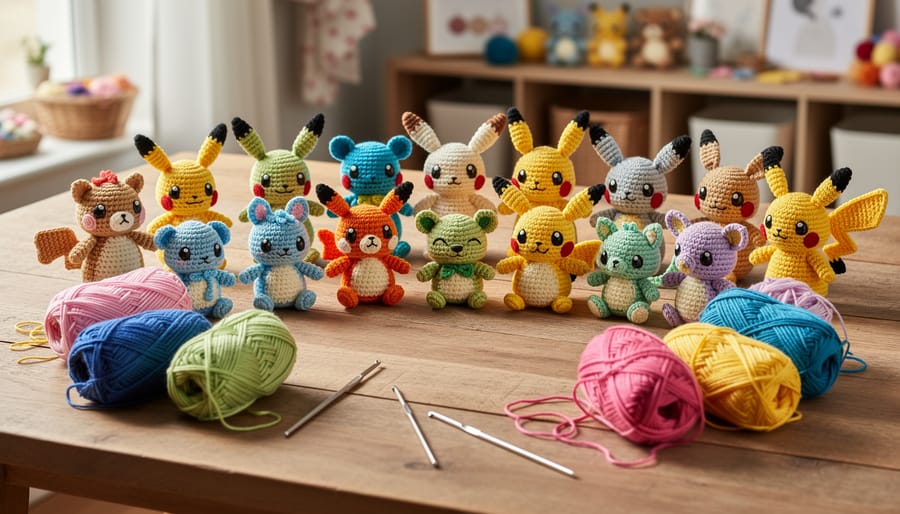
15 Free Pokemon Crochet Patterns You Can Start Today
Beginner-Friendly Patterns (Items 1-5)
Starting your Pokemon amigurumi journey with the right patterns makes all the difference. These five beginner-friendly designs use simple shapes, minimal color changes, and straightforward construction to help you build confidence while creating recognizable characters.
1. Pikachu (Round Body)
This classic electric mouse works up quickly with its sphere-shaped body and small attached ears. The pattern uses primarily single crochet stitches in yellow yarn with minimal black and red details for the face and cheek circles. Most versions finish around 4 inches tall, making it a manageable first basic project that doesn’t require hours of work. The tail can be crocheted flat and sewn on, eliminating the need to master complex shaping.
2. Ditto
If you want to start with the absolute simplest Pokemon, Ditto is your answer. This pattern consists of a single pink sphere with two dot eyes and a curved line for a mouth, often added with embroidery or felt. You’ll work entirely in one color using basic increase and decrease rounds to create the blob shape. The pattern typically uses magic ring starts and continuous rounds, giving you practice with fundamental amigurumi techniques without any tricky assembly.
3. Jigglypuff
This pink puffball shares Ditto’s straightforward sphere construction but adds minimal details that teach you basic attachment skills. The pattern uses light pink yarn for the body, with small triangular ears crocheted separately and sewn on top. Eyes can be safety eyes or felt circles, and the tuft of hair on top requires just a few stitches. The finished size usually measures 5 to 6 inches, giving you a satisfying result from about two hours of work.
4. Squirtle (Simplified Version)
Beginner-friendly Squirtle patterns feature a round blue body with a separate tail that attaches at the back. The head and body are worked as one continuous piece from bottom to top, eliminating difficult seaming. The shell can be created as a flat circle in brown yarn and sewn onto the back rather than constructed as a three-dimensional piece. Small arms and legs worked in simple tube shapes attach easily, and the face details work best with felt pieces.
5. Bulbasaur (Basic Design)
This grass-type starter uses a turquoise body similar in construction to Squirtle, with four simple leg stubs worked directly into the body rounds. The signature bulb on its back can be made as a small green sphere using the same increase-decrease pattern you’ve already learned from the other characters. Red or pink spots on the bulb add visual interest with just yarn changes or felt appliques, keeping the pattern accessible while still looking authentic.
Intermediate Patterns (Items 6-10)
These intermediate patterns challenge you to work with multiple components and more intricate details while still remaining approachable for crocheters with some amigurumi experience under their belt.
6. Jirachi, The Wish Pokemon
At 5.5 inches tall and wide (measured to the headdress points), this mythical steel and psychic-type Pokemon makes a charming project for those ready to tackle distinctive features. The pattern uses jumbo acrylic yarn in white and yellow with green accents, worked with a 4.5mm hook. What sets this apart is the continuous construction of the body and head from bottom to top, plus those signature headdress points that require careful shaping. You’ll need felt in five colors (black, white, green, pink, and dark pink) for facial features and belly details, secured with a felting needle and black thread. The pattern works through rounds labeled clearly (R1, R2, etc.) and uses a full range of stitches including half double and double crochet for shaping. This is perfect practice for managing multiple yarn colors and creating three-dimensional details that stand out.
7. Eevee, The Evolution Pokemon
This beloved normal-type requires assembling several separate pieces: head, body, tail, ears, and those distinctive fluffy collar tufts around the neck. The brown and cream color scheme means frequent yarn changes, and getting that signature fluffy mane texture right takes patience with your increase placement. Most patterns finish around 6 to 7 inches tall, making Eevee a substantial project that teaches you how different parts connect seamlessly.
8. Snorlax, The Sleeping Giant
Don’t let the simple shape fool you. This drowsy behemoth typically works up to 8 or 9 inches, requiring consistent tension across a large surface area to avoid lumpy stuffing. The cream and teal colorwork for the belly and face demands precision, and you’ll practice surface embroidery or felt application for those closed, peaceful eyes and claws.
9. Gengar, The Shadow Pokemon
This ghost and poison-type introduces you to working with dark purple yarn where your stitches are harder to see. The wide, mischievous grin requires careful felt placement or embroidery, and those pointy ears and spiky back details need firm stuffing to hold their shape. Gengar’s squat, rounded body with extending limbs teaches you how to position appendages for character personality.
10. Togepi, The Spike Ball Pokemon
The challenge here lies in creating that iconic eggshell pattern with red and blue triangles on white. You’ll either work intarsia color changes directly into your rounds or apply felt pieces precisely to match the character’s shell markings. The small arms and legs attach to a primarily egg-shaped body, and getting the proportions right so Togepi stands balanced takes some trial positioning before final assembly.
Advanced Patterns (Items 11-15)
For seasoned crocheters ready to tackle complex projects, these advanced patterns deliver the detail and challenge that make finished pieces true showstoppers.
11. Legendary Articuno, Multi-Color Masterpiece
This ice-flying type requires precise color transitions between blues and whites, with separately crocheted wing feathers that attach to create Articuno’s distinctive wingspan. The pattern involves intricate shaping for the crest and tail plumes, plus detailed facial features. Expect to work with at least five colors and master invisible decreases to maintain clean lines across 8-10 hours of stitching.
12. Dragonite, Large-Scale Construction
Standing over 12 inches tall when complete, this gentle dragon demands significant yarn investment and stamina. The pattern features dimensional wings attached with wire armature for posing, separately crafted antennae, and careful shading from orange to cream across the belly. Advanced decreasing techniques shape the rounded body while maintaining stuffing distribution in a larger form.
13. Umbreon, Dark-Type Detail Work
Umbreon’s sleek black body with yellow ring markings requires meticulous color changes mid-round to create the glowing circles on ears, forehead, tail, and legs. The pattern uses surface crochet for fine details and specific placement of felt accents. Getting the proportions right, especially the large ears and segmented tail, tests your ability to follow complex shaping instructions across multiple components.
14. Charizard, Full Dragon Assembly
This fan-favorite involves creating wings with individual finger details, a flame-tipped tail with color gradation, horns, spikes along the neck, and proper limb positioning for a dynamic stance. You’ll work orange, cream, and teal yarns with frequent color switches, plus execute advanced joining techniques to attach wings securely. The head alone requires careful attention to create Charizard’s distinctive expression.
15. Mimikyu, Disguise Construction Challenge
Though small, Mimikyu’s pattern complexity comes from recreating the handmade costume aesthetic, intentionally imperfect stitching on the Pikachu disguise, the black shadow body underneath, and the worn fabric appearance. The pattern combines traditional amigurumi with surface embroidery, appliqué techniques for the drawn-on face, and strategic use of different yarn textures. Achieving the “creepy-cute” balance requires precision in both construction and finishing details.
These patterns reward patience with museum-quality results that showcase advanced crochet skills.
Essential Materials and Tools for Pokemon Amigurumi
You’ll need a consistent set of craft supplies to bring any Pokemon pattern to life, and choosing the right types of materials makes a real difference in your finished amigurumi.
Acrylic yarn is the go-to choice for Pokemon projects because it’s affordable, comes in every color imaginable, and holds its shape well after stuffing. Most patterns call for worsted weight yarn, though some larger projects use jumbo acrylic yarn for quicker stitching and a bulkier look. A 4.5mm crochet hook pairs perfectly with most medium-weight yarns and gives you the tight tension amigurumi needs to prevent stuffing from showing through.
- Fiber-fill stuffing: Creates the plush, huggable texture and helps maintain the rounded Pokemon shapes
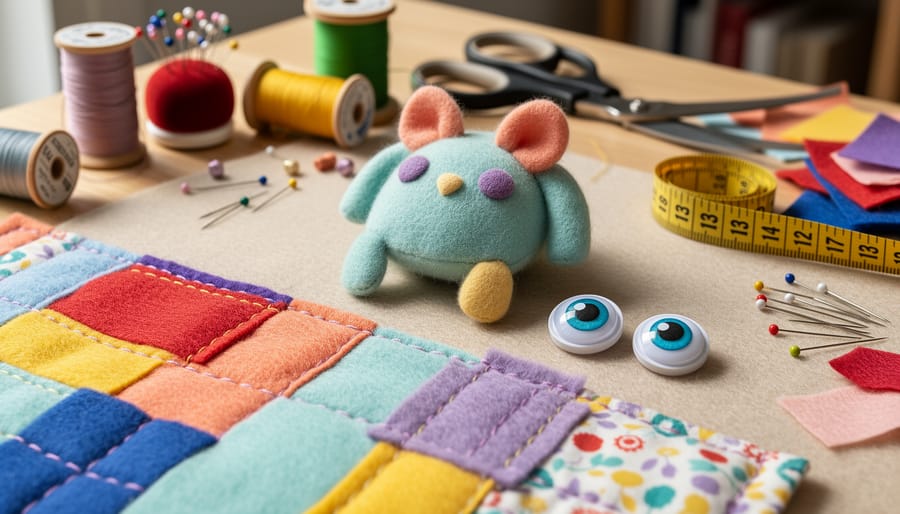
- Felt pieces: Essential for adding eyes, mouths, and other facial features that define each character
- Tapestry needle: Weaves in yarn ends and sews pieces together invisibly
- Embroidery needle and thread: Secures felt details and adds fine embroidered accents
- Felting needle: Attaches felt features smoothly without visible stitching
Sharp scissors make clean cuts when switching colors, which matters when you’re working with patterns that have multiple color changes. Gathering the best supplies upfront means you won’t need to pause mid-project to hunt for materials. Stock up on basic colors like yellow, red, blue, white, and black, since these appear in countless Pokemon characters, and add specialty shades as specific patterns require them.
Tips for Success with Free Pokemon Patterns
Mastering a few key techniques will transform your free Pokemon patterns from frustrating puzzles into enjoyable projects. Start by familiarizing yourself with common abbreviations: MR (magic ring), Sc (single crochet), Inc (increase), Hdc (half double crochet), Dc (double crochet), Dec (decrease), Tch (turning chain), Ch (chain), sl st (slip stitch), and f/o (finish off). If you encounter unfamiliar abbreviations, check the Crochet abbreviation master list for reference.
Consistent tension makes the difference between a professional-looking Pikachu and a lumpy one. Your stitches should be tight enough that the stuffing won’t show through, but loose enough to insert your hook comfortably. Most Pokemon patterns work in continuous rounds (spiraling upward without joining), which creates smooth surfaces perfect for character features. If your pattern specifies joined rounds instead, you’ll slip stitch at the end of each round and chain one before continuing.
Stuff your Pokemon firmly as you go rather than waiting until the end. This prevents stretching the fabric to force filling into a narrow opening. For limbs and small parts, use the eraser end of a pencil to push stuffing into tight spots. When attaching felt details like eyes and mouth, secure them with matching thread using small, hidden stitches, similar to techniques for using adhesive in paper crafts where precision matters.
For recognizable Pokemon features, pay close attention to placement measurements in your pattern. Eyes positioned even one stitch off can change a character’s entire expression. Count your stitches carefully at the end of each round, mark your starting point with a stitch marker, and reference photos of the finished pattern whenever possible.
Where to Find More Free Pokemon Patterns in 2026
Beyond the 15 patterns featured here, you’ll find a wealth of free Pokemon designs across dedicated craft blogs and community sites. Craft blogs like 1upcrochet.com regularly add new patterns to their “New Free Patterns” section, their February 2026 Pikachu ketchup-bottle pattern shows how creators keep designs fresh and timely. Pinterest boards and Ravelry groups serve as treasure troves where crocheters share their favorite finds, though you’ll want to skim the comments for feedback on clarity before committing your time.
When evaluating a new pattern, check for the markers of quality we discussed earlier: clear stitch counts, abbreviation guides, and photos of the finished piece. Patterns that list materials, hook size, and final dimensions upfront save you headaches down the road. If the first few rounds seem confusing or the gauge feels off, trust your instincts and move on, there’s always another Pikachu pattern waiting.
Are free Pokemon patterns legal to use?
Most free patterns are shared for personal use only. You can make the amigurumi for yourself or as gifts, but selling finished Pokemon items typically violates the intellectual property rights held by The Pokemon Company and Nintendo.
How do I know if a pattern is beginner-friendly?
Look for patterns labeled “easy” or “beginner” that use basic stitches (single crochet, increase, decrease), work in simple shapes, and require minimal color changes. Patterns with fewer than 10 rounds or steps usually work well for newcomers.
What if I can’t find a pattern for my favorite Pokemon?
Join online crochet communities on Reddit, Facebook, or Discord to request pattern recommendations or ask experienced makers for tips on adapting similar designs. Many lesser-known Pokemon share body shapes with popular characters, making modifications easier than starting from scratch.
Bookmark your favorite pattern sources and check back monthly, designers often release new Pokemon to coincide with game launches or anime events. Joining a crochet community gives you access to pattern swaps, troubleshooting help, and inspiration that keeps your hook moving long after you’ve finished your first Eevee.